



02 Jun Water quality and the agro-livestock sector
For most of us, since we were in school, we have been repeatedly told that Colombia occupies a privileged place in the rankings of water wealth and biodiversity. And although the media, the education system, and ourselves often magnify our national strengths, in this case, they are not entirely based on false facts.
Some of the potential questions that branch out from this discussion are:
How are we currently using our water resources?
When we talk about water supply, are we considering only the quantity of the resource, or are we also assessing the quality?

How can we incorporate the concept of sustainability in its use?
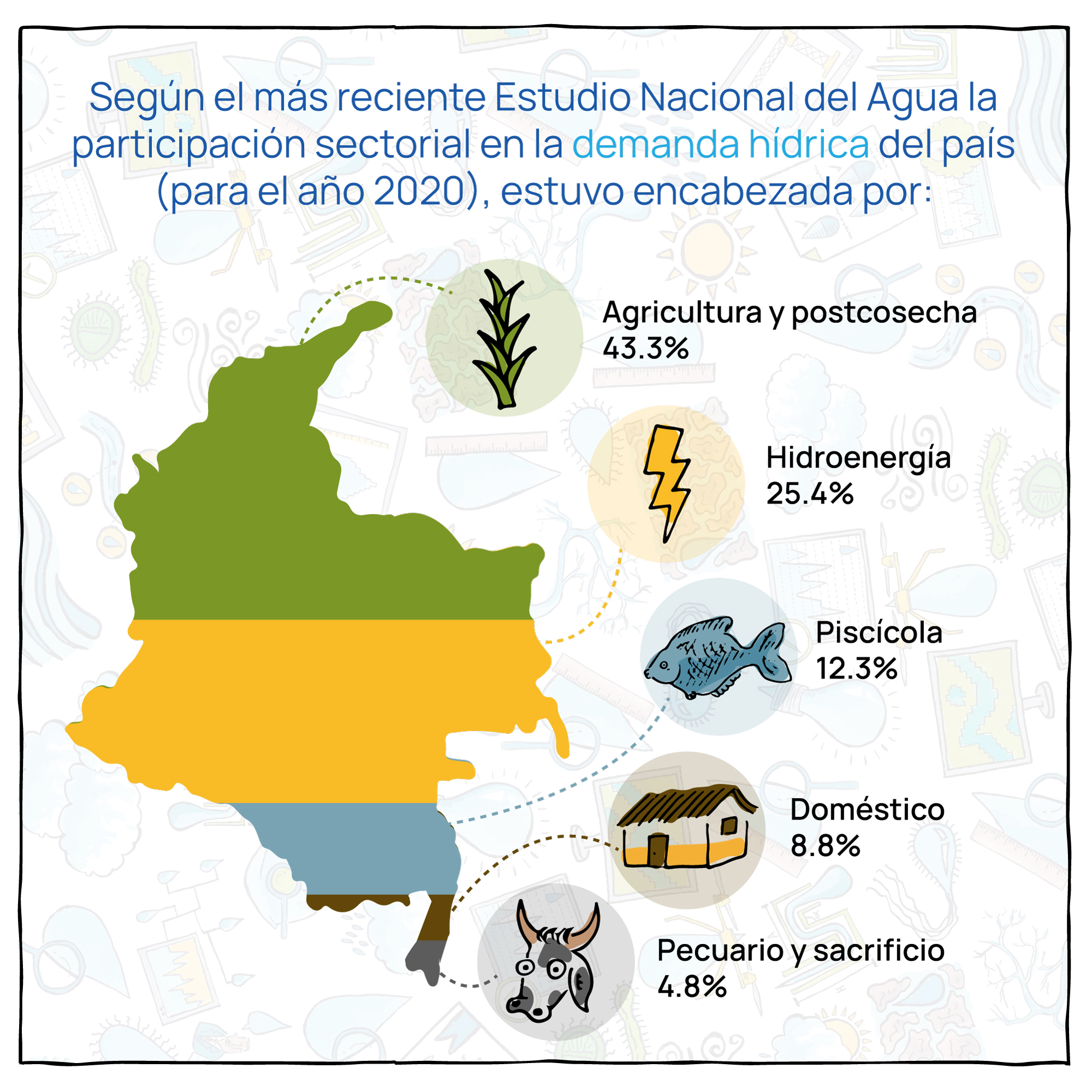
The National Water Study (ENA) (MADS, 2022) is a document that addresses the study, conceptualization, and quantification of some fundamental aspects of the water resource in the country throughout its cycle. This study is updated every 4-6 years and is a fundamental tool for comprehensive territorial management, with water as its primary axis, its fundamental regional characteristics, and its trend change. From this document, we can find that the sectoral participation in the country’s water demand in 2020 is led by:
- Agriculture and post-harvesting: 43.3%
- Hydropower: 25.4%
- Aquaculture: 12.3%
- Domestic: 8.8%
- Livestock and slaughtering: 4.8%
This sectoral breakdown highlights that Colombia is a country that has much of its productive apparatus based on agriculture. Therefore, the focus of measures to prevent and mitigate impacts on the resource should be focused on this sector.
Water in the agricultural sector
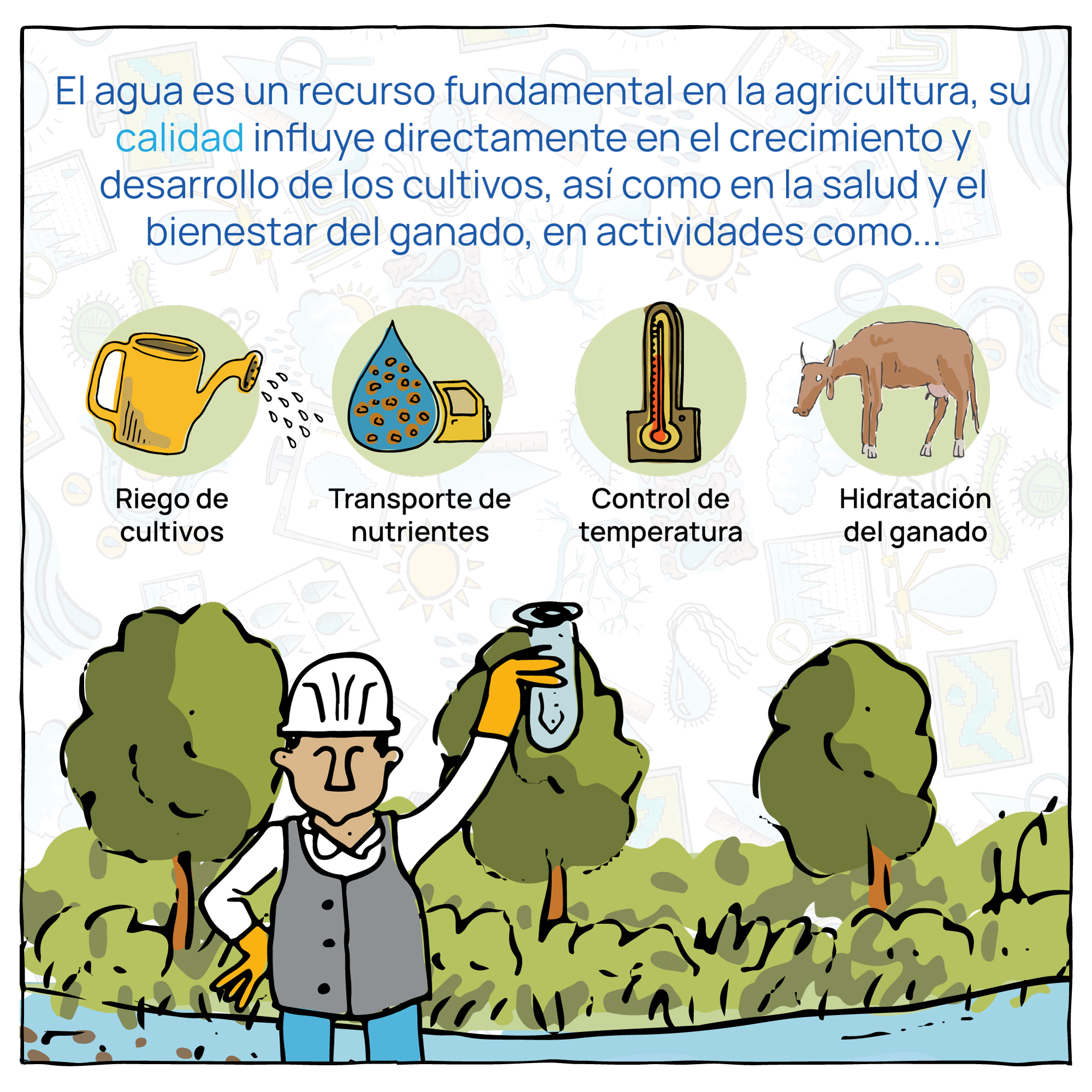
Water is the fundamental resource in agriculture, playing an essential role in food production worldwide, and therefore, it has an increasingly important strategic role. Its importance lies in its direct influence on the growth and development of crops, as well as on the health and well-being of livestock. Here are some of the reasons why water is the primary input in agriculture:
Crop irrigation: Irrigation provides the right amount of water to crops, ensuring they receive the necessary moisture for optimal growth. This is especially crucial in regions where rainfall is insufficient or irregular.
Nutrient transport: Water acts as a medium to transport essential nutrients from the soil to the roots of plants. Without sufficient water, crops cannot absorb the necessary nutrients for their development.
Temperature control: Water regulates soil temperature and thus influences the local climate in the field. Well-hydrated soil can better withstand temperature fluctuations and protect plant roots.
Livestock hydration: In livestock farming, water is crucial for maintaining the health and production of livestock. Animals need water for digestion, regulating body temperature, and milk and meat production.
What if I need water for this purpose?
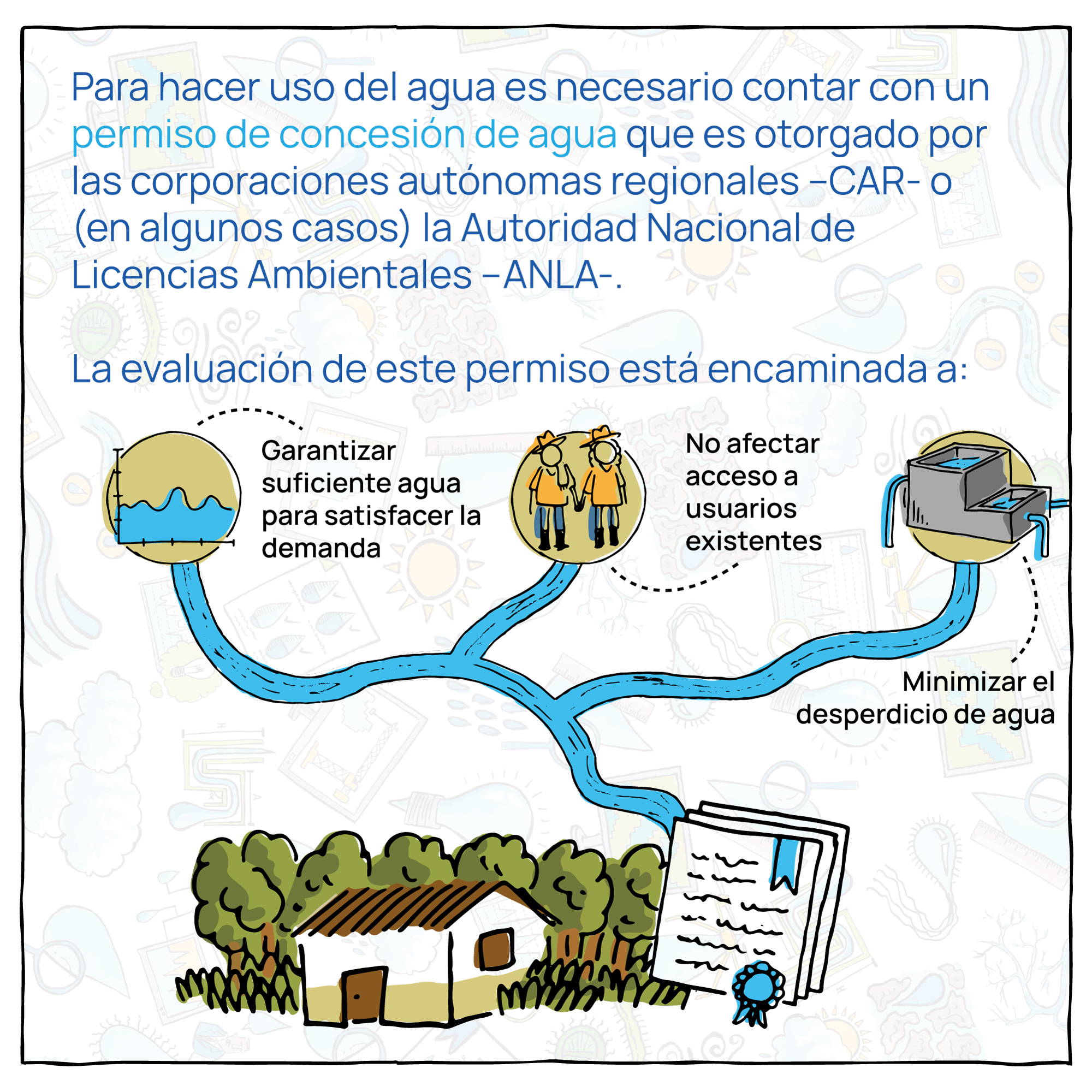
The first thing to consider is that natural or legal persons can use water through a water concession permit granted by the regional autonomous corporations (CAR), or in some cases, the National Environmental Licensing Agency (ANLA). The evaluation of this permit aims to:
Ensure that there is enough water in the supplying source to meet the required water quantity.
Ensure that, including this new demand in the basin, existing users do not see their access to the resource affected.
Ensure that the infrastructure for collection, conduction, and delivery has basic efficiency characteristics, seeking to minimize wasted water in the intervention.
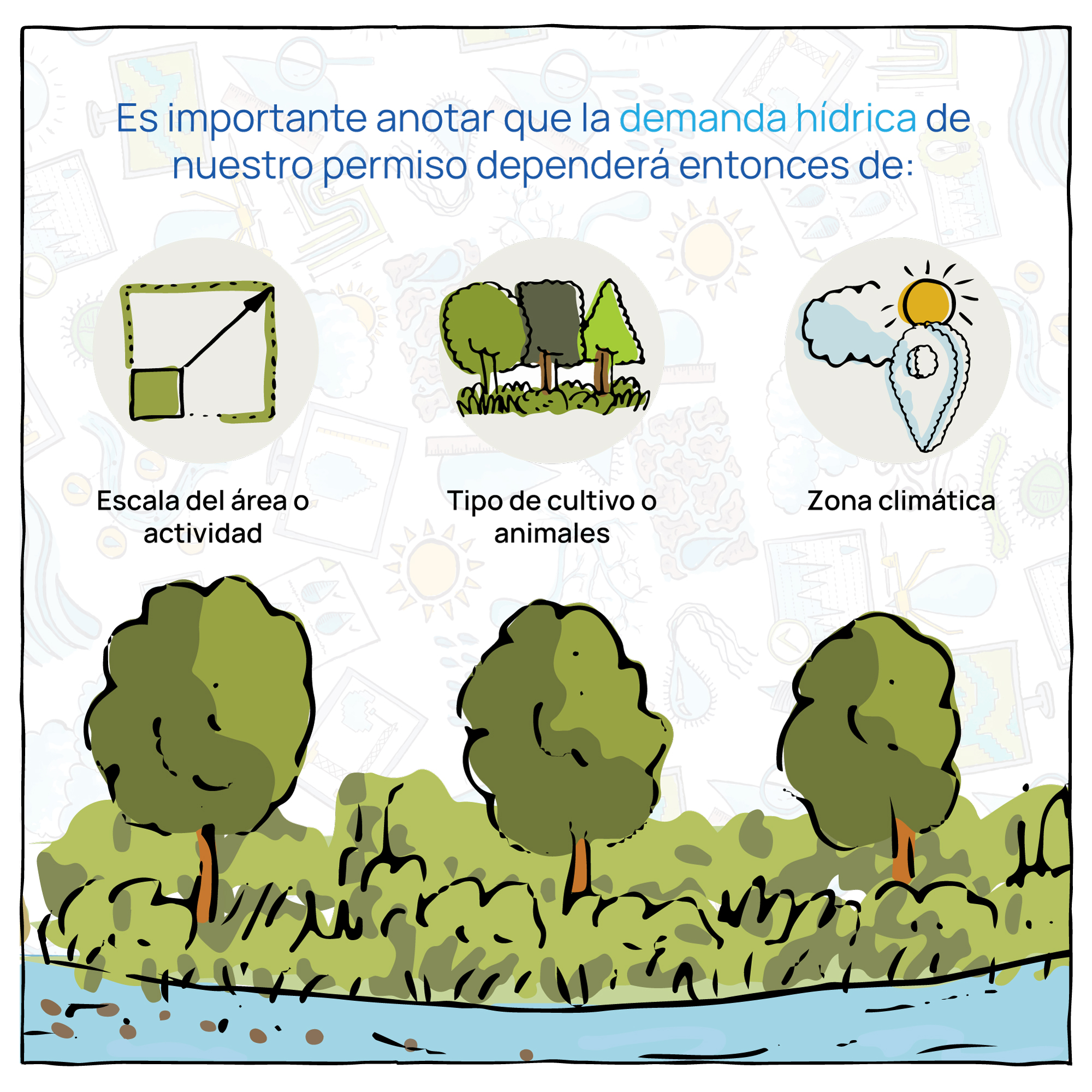
It is important to note that the water demand of our permit will then depend on:
Total size of the crop or total number of animals to be raised.
Type of crop or animals: different crops or animals require different amounts of water for sustenance.
Climatic zone: in warmer places, water consumption is higher because individuals (animals or plants) require more hydration due to high temperatures. Additionally, because evapotranspiration of water is higher in these areas, greater losses in the system must be considered.
And what about water quality?
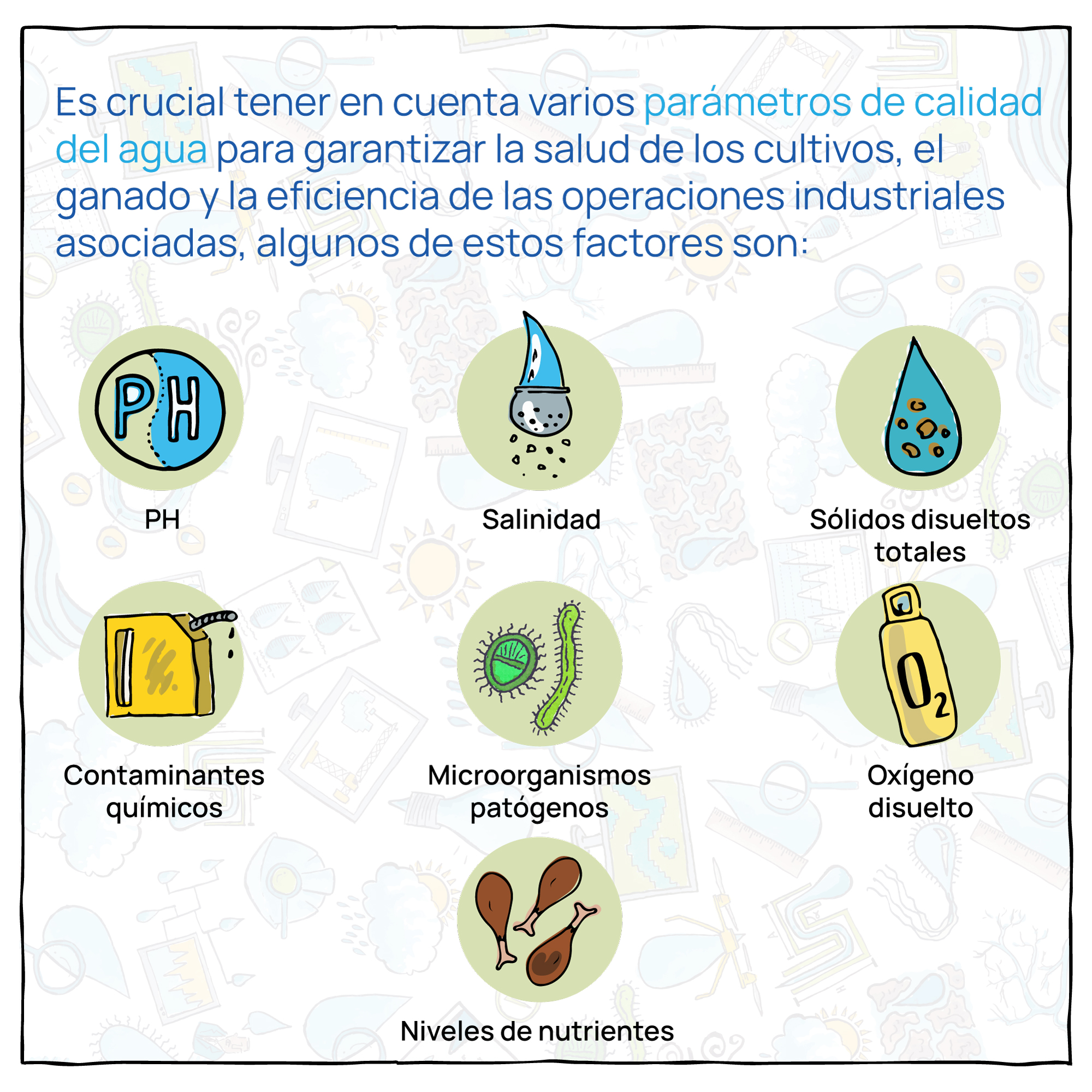
It is crucial to consider several water quality parameters to ensure the health of crops, livestock, and the efficiency of associated industrial operations. Some of the main water quality parameters to consider are:
pH: The pH of water should be within an appropriate range to avoid it being too acidic or alkaline, as extreme values can affect the availability of nutrients and the effectiveness of pesticides.
Salinity: Water salinity, measured in electrical conductivity, is important to avoid salt accumulation in the soil, which can damage plants and reduce productivity.
Total Dissolved Solids (TDS) content: High TDS levels can indicate a high concentration of salts and minerals in the water, which can be harmful to crops and livestock.
Chemical contaminants: It is important to analyze the presence of chemical contaminants, such as heavy metals, pesticides, herbicides, and other chemicals that may be harmful to crop or livestock health.
Pathogenic microorganisms: The presence of bacteria, viruses, and parasites in water can be harmful to livestock health and can also contaminate crops irrigated with contaminated water.
Dissolved Oxygen: In aquaculture systems and bodies of water used for irrigation, dissolved oxygen is essential for aquatic life and can affect the health of fish and other aquatic organisms.
Nutrient levels: Nutrient levels, such as nitrogen and phosphorus, in water can influence plant growth and soil quality in irrigation systems.
In the environmental regulatory decree 1076 (MADS, 2015), the suggested quality thresholds in decree 1594 of 1984 are collected.
FOR AGRICULTURAL USE
Reference Expressed as Value
Aluminum Al 5.0
Arsenic As 0.1
Beryllium Be 0.1
Cadmium Cd 0.01
Zinc Zn 2.0
Cobalt Co 0.05
Copper Cu 0.2
Chromium Cr+6 0.1
Fluorine F 1.0
Iron Fe 5.0
Lithium Li 2.5
Manganese Mn 0.2
Molybdenum Mo 0.01
Nickel Ni 0.2
pH Units 4.5-9.0 units
Lead Pb 5.0
Selenium Se 0.02
Vanadium V 0.1
Furthermore:
a) Boron, expressed as B, should be between 0.3 and 4.0 mg/l depending on the type of soil and the crop;
b) The Most Probable Number (MPN) of total coliforms should not exceed 5,000 when the resource is used for irrigation of fruits consumed without peeling and for short-stemmed vegetables;
c) The MPN of fecal coliforms should not exceed 1,000 when the resource is used for the same purpose as mentioned in the previous item.
FOR LIVESTOCK USE
Reference Expressed as Value
Aluminum Al 5.0
Arsenic As 0.2
Boron B 5.0
Cadmium Cd 0.05
Zinc Zn 25.0
Copper Cu 0.5
Chromium Cr+6 1.0
Mercury Hg 0.01
Nitrates + Nitrites N 100.0
Nitrite N 10.0
Lead Pb 0.1
Salt content Total weight 3,000
At GOTTA, we are available to support your production process or environmental permit, from defining the most relevant parameters to be considered, to mathematical modeling of potential impacts. Contact us!